

Company fails to prove insolvency, losing $7m claim against Tax Commissioner

By Carlos Tse
15 September 2026 • 2 minute read
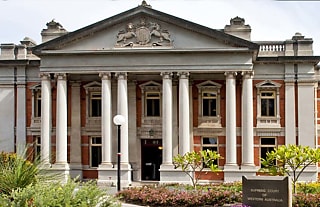
The Supreme Court of Western Australia has scrapped an application by LCM Recoveries Pty Ltd in pursuit of repayment of $7,005,329.27 for a total of 86 impugned transactions over the period 24 December 2012 to 6 June 2013 made to the Commissioner of Taxation, on behalf of Construction Industries Australia Ltd (CIA).
LCM argued that each of the 86 transactions made to the commissioner reduced CIA’s tax liabilities, and were voidable transactions due to them constituting unfair preferences and insolvent transactions, alleging that CIA was insolvent on 12 October 2012.
“LCM submits that a finding should be made that the return was not lodged because those controlling CIA knew it to be insolvent,” the court heard.
CIA failed to lodge its income tax return for the 2012 financial year when due on 15 January 2013.
Justice Gary Cobby of the Supreme Court ruled that on the balance of probabilities, CIA was not insolvent as a result of paying its total of $4,271,907.36 in tax liabilities to the ATO as at 13 December 2011.
CIA was initially on a quarterly payment cycle for BAS and a monthly payment cycle for employee withholding taxes with the ATO, but moved to weekly following the rapid growth of their workforce and the growing size of their payroll PAYG obligation.
After this change, CIA did not pay its weekly PAYGW liabilities from 20 September 2012 to 29 October 2012 (40 days), and as a result CIA’s debt to the ATO increased to $3,335,135.84 by 2 November 2012.
Despite this, the court found that outside of these dates, CIA largely complied with its PAYGW payment obligations, failing to pay on time on one occasion on 27 August 2012.
The court noted that CIA may have simply failed to pay its tax debt because of a lack of presently available funds to do so, stressing that “proof of a failure to pay one debt ordinarily does not prove insolvency”.
“I am not satisfied that fact alone was sufficient to give rise to a reasonable suspicion on the part of the Commissioner that CIA was insolvent.”
“A company is not insolvent on a given day only because on that day or for some short period thereafter the company was unable from readily available liquid assets to pay its debts as they became due and payable,” Justice Cobby said.
“A failure to pay a debt, or to pay it in a timely way, may of itself not ground a suspicion of insolvency but instead indicate the mere presence of a liquidity problem or perhaps raise a possibility that the debtor is insolvent but without providing sufficient foundation for the formation of an actual suspicion that the debtor is actually insolvent.”
The judge found that CIA failed to provide accounting records, and determined that it was “not satisfied” that the further reports provided to the court should be accepted as satisfactory evidence of the state of CIA’s financial position at any particular time.
Another factor that the court took into account, weighing in favour of solvency, was that in 2013, CIA had “net positive assets and cash at bank of approximately $4.9 million as at 30 April 2013”.
The court said that, in determining solvency, it was important to consider the company's overall financial position, having regard to “commercial reality”.
“Commercial realities will be relevant in considering what resources are available to the company to meet its liabilities as they fall due, whether resources other than cash are realisable by sale or borrowing upon security, and when such realisations are achievable,” it said.
Upon consideration of all evidence, Judge Cobby was not satisfied on the balance of probabilities that CIA was insolvent prior to 21 June 2013, dismissing the LCM Recoveries Pty Ltd’s application for repayment of $7,005,329.27 to CIA.
The case citation: LCM Recoveries Pty Ltd v Commissioner of Taxation of the Commonwealth of Australia [No 2] [2026] WASC 327 (7 August 2026).
Want to see more stories from trusted news sources?
Make Accounting Times a preferred news source on Google.
Click here to add Accounting Times as a preferred news source.
Carlos Tse
AUTHOR
Carlos Tse is a graduate journalist writing for Accountants Daily, HR Leader, Lawyers Weekly.
KNOW MORE