

Labor taking concerns about safeguards for TPB powers 'seriously', says MP

21 August 2026 • 2 minute read
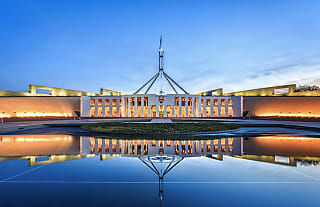
The bill to expand the Tax Practitioners Board’s (TPB) regulatory penalty powers and amend the foreign resident CGT (CGT) regime was debated in the lower house on Thursday, with the House of Representatives agreeing to a third reading.
The Strengthening Accountability for Tax Adviser Misconduct and Other Measures Bill amends the Tax Agent Services Act 2009 (TAS Act) to provide the TPB with new and expanded regulatory penalty powers.
The bill contains stronger provisions for cracking down on unregistered preparers but also introduces new interim suspension powers which would enable the TPB, in certain circumstances, to immediately suspend a tax practitioner’s registration without the need to commence or finalise an investigation into a suspected contravention of the TAS Act.
The professional accounting bodies and the accounting profession more broadly have raised concerns about interim suspension powers and the potential reputational impact they may have on practitioners when TPB investigations later conclude that no misconduct occurred.
The accounting associations have said that the exercise of this power "must be confined to the most exceptional circumstances".
Accountant Warren Seeto similarly said that stronger regulatory powers must be matched by stronger safeguards, including clearer evidentiary standards, independent assurance and neutral public disclosures.
The government is currently consulting on the subordinate legislation that supports the bill, which includes draft regulations and a draft determination.
The professional bodies have also raised concerns that the draft regulations and determination do not reflect parliament's intent and create uncertainty about when the TPB may exercise this proposed new power.
Speaking in parliament, the Member for Moore, Tom French, said that during the consultation about the TPB’s expanded powers, stakeholders had raised concerns about what safeguards would be implemented in relation to the board’s new powers.
“There has been broad support for giving the Board a wider enforcement toolkit. [However] some stakeholders have raised reasonable questions about the safeguards around the new powers and those concerns should be taken seriously,” French said.
“Whenever Parliament gives a regulator stronger powers, proportionality and procedural fairness matter, but the answer cannot be to leave a known enforcement gap in place. If the rules are important enough to have, then the regulator must have the tools to enforce them.”
French said while the overwhelming majority of tax professionals provide competent, lawful advice, the TPB has “too few options” between low-level sanctions and the much more serious steps of suspension, termination or civil penalties.
The legislation, he said, would enable the Board to be able to issue infringement notices, accept enforceable undertakings, and impose contingent or interim suspensions.
The bill also extends the maximum period an individual must wait to reapply for registration after termination for the most serious types of conduct, from five years to 10.
French said: “Not every breach requires the regulatory equivalent of a sledgehammer, but a regulator should not be standing there with a rolled-up newspaper when serious misconduct occurs. The Tax Practitioners Board needs tools between those two extremes.”
Want to see more stories from trusted news sources?
Make Accounting Times a preferred news source on Google.
Click here to add Accounting Times as a preferred news source.
Miranda Brownlee
AUTHOR
Miranda Brownlee is the news editor of Accounting Times, an online publication delivering analysis and insight to Australian accounting professionals. She was previously the deputy editor of SMSF Adviser and has broad business and financial services reporting experience, having written for titles including Investor Daily, ifa and Accountants Daily. You can email Miranda on: [email protected]
KNOW MORE