

RSM Australia appoints new R&D tax partner

12 November 2026 • 2 minute read
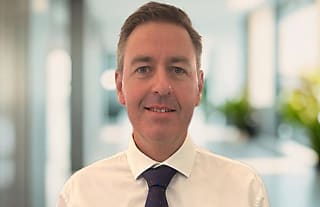
RSM Australia has announced that it has appointed Scott Olding as a new partner in its research and development (R&D) tax division in Sydney as a strategic part of its continued growth and expansion.
Chief executive partner Robert Miano said Olding would be a valuable addition to the firm’s R&D tax team as businesses grapple with understanding the complex R&D tax incentives regime.
“It can be extremely challenging for business owners to determine whether their R&D activity qualifies for tax offsets, so we look forward to leveraging Scott’s expertise and experience to help simplify this process for our clients,” Miano said.
“We are committed to recruiting the best and brightest advisers to help businesses reduce the cost of innovation.”
Olding has joined RSM Australia after previously spending eight years as a KPMG partner. He left in 2018 and co-founded Robovoid to develop and commercialise sustainable engineering solutions and products primarily for the construction industry.
He has 30 years of experience in professional services and R&D, having led the R&D tax incentive and government grants teams across Australia and New Zealand.
Olding said he could bring a unique perspective to his new role at RSM Australia given his experience on “both sides of the fence”.
He said: “I think clients will appreciate that I have led R&D tax teams in one of the big four accounting firms, as well as co-founding a business which researched, developed and commercialised a world-first technology.
“What I am most passionate about is bringing people, ideas and opportunities together and helping organisations to solve the problems of tomorrow – whether that means accessing R&D funding, navigating the innovation ecosystem, or connecting them with the right people and expertise through my network.
“I’m genuinely excited to be joining RSM Australia and look forward to working with a fantastic team which is contributing to the firm’s continued growth.”
Olding’s appointment has come at a time of potential looming changes in the R&D sector, with the government recently introducing the Treasury Laws Amendment (Tax Reform No. 4) Bill 2026, which includes changes to the R&D tax incentive, along with the innovative business CGT concession.
Under the proposed changes, access to refundable R&D tax offsets would be limited to “young” R&D entities that have been operating for less than 10 years, or less than 15 years for entities conducting R&D related to generating knowledge about therapeutic goods.
Businesses under 10 years old will be able to continue claiming refundable offsets until their turnover reaches $50 million (up from $20 million), at which point they can only assess the non-refundable offset.
In addition, supporting R&D activities will no longer be eligible for R&D offsets. Instead, a new ministerial power has been introduced to determine eligibility for R&D activities (by legislative instrument) that are “integral” to conducting another R&D activity.
The maximum R&D expenditure threshold will increase from $150 million to $200 million.
Several accountants have expressed concerns about the proposed reforms, especially removing eligibility for supporting R&D activities, which they said could undermine the intended benefits.
Want to see more stories from trusted news sources?
Make Accounting Times a preferred news source on Google.
Click here to add Accounting Times as a preferred news source.
Malavika Santhebennur
AUTHOR
Malavika Santhebennur is a journalist on the accounting titles at Momentum Media, Accountants Daily and Accounting Times. She writes news about the accounting industry, regulatory changes, compliance, and the wider accounting landscape. Prior to this, Malavika wrote across several brands in Momentum Media and covered a range of industries, including mortgages, broking, law, real estate, wealth, space, aviation, and defence. Before joining Momentum Media in 2019, Malavika wrote for Money Management and Super Review, with a focus on financial services, wealth, and superannuation.
KNOW MORE