

Jin Sakhare – Driving financial excellence through innovation
By Reventon
9 November 2026 • 5 minute read
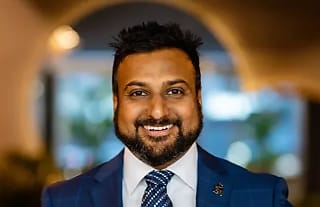
1. How did you start down this career path?
My interest in finance started long before I considered it as a career.
Growing up, my father operated a transport business, and from around Grade 6, I was already involved in understanding the financial side of things. He would explain concepts like interest rates, hand me receipts and cash to count, and ask me to work out whether a particular job or transaction had made money.
My father also had experience working as a debt collector for state governments, so conversations about money, business and financial responsibility were a regular part of my childhood.
I became the unofficial money counter in the family, and I genuinely enjoyed it. I liked understanding where money came from, where it went and what made a business profitable.
When it came time to choose my academic direction, I had options across science, sport and the arts, but commerce was the natural choice. It was what interested me most.
I went on to complete a Master of Professional Accounting and a Master of Business Administration at Deakin University. Over the past decade, I've worked across various industries, progressing from hands-on accounting roles into senior financial leadership positions.
Today, as Group Finance Manager at Reventon, I still approach finance with that same curiosity I developed as a child. The numbers tell a story, and my job is to understand that story and use it to make better decisions.
2. What inspires you in your role and industry? Why?
What motivates me most is the ability to solve problems before they become problems.
I believe that when you have accurate, up-to-date financial information and a strong understanding of what's happening across your industry, you can make decisions that genuinely improve a business.
For me, finance isn't just about reporting on what has already happened. It's about anticipating what could happen next.
Whether it's an upcoming legislative change, an emerging financial risk or an opportunity to improve an internal process, I enjoy identifying what needs to be done early and putting the right systems in place.
A good example is the evolving anti-money laundering and counter-terrorism financing requirements. I began studying the changes approximately six months ahead of their implementation so we could prepare our processes rather than react at the last minute.
Some of my most satisfying achievements are the challenges that nobody else even realises could have become an issue, because we've already addressed them.
That's what I enjoy about financial leadership: being proactive, protecting the business and helping create an environment where everyone else can focus on doing their jobs well.
3. What's your approach to customer service that separates you from the rest?
I believe excellent customer service starts with accuracy, transparency and accountability.
Working within a business like Reventon, which operates across property investment, finance, accounting, financial planning and property management, means financial decisions can affect many different stakeholders.
Our responsibility is to ensure that our internal teams, clients, suppliers and business partners can rely on the financial information and processes we manage.
My approach is to build systems that are not only accurate and compliant but also practical and easy to use.
We've introduced more flexible payment options, strengthened our financial controls and improved internal reporting to create a more seamless experience for the people interacting with our business.
I also believe the way you treat people matters just as much as the technical work you deliver.
One of Reventon's core values is Integrity, and I was honoured to receive the company's Integrity Award. For me, integrity means being consistent, taking responsibility and doing the right thing, even when nobody is watching.
Ultimately, strong financial management should make life easier for others, not more complicated.
4. How do you innovate and stay ahead of industry trends?
My approach is to continually question whether the way we're doing something today is still the best way to do it tomorrow.
Technology is changing the accounting profession rapidly, and I believe finance teams need to embrace that change rather than resist it.
At Reventon, we've focused on modernising financial operations through improved digital payment solutions, more efficient trust accounting processes, stronger reporting and greater automation.
We've introduced payment options including Stripe, PayTo, Apple Pay and Google Pay, making transactions more convenient while improving internal efficiency.
We've also strengthened our reporting capabilities through platforms such as Fathom, providing leadership with clearer visibility over financial performance and supporting more informed strategic decisions.
But innovation isn't simply about adopting the newest software. It's about finding technology that solves a genuine problem.
I spend a considerable amount of time monitoring legislative developments, reviewing industry changes and identifying opportunities to improve our systems before they become operational necessities.
I see artificial intelligence playing an increasingly important role in finance, particularly in reducing repetitive administrative tasks and helping teams analyse information more effectively.
My philosophy is that technology should work with people, not against them. The objective isn't to replace talented employees but to give them better tools so they can focus on work that adds greater value.
5. What is the toughest challenge you've faced in your role? How did you overcome it?
One of the biggest challenges I've encountered is helping businesses adapt to a constantly changing financial and regulatory environment while transitioning away from outdated, paper-based processes.
When businesses grow, the systems that worked when they were smaller don't always remain effective.
At Reventon, part of that challenge has involved modernising established processes while ensuring that financial accuracy, compliance and day-to-day operations aren't compromised.
Introducing new software or changing the way a team works can be challenging, particularly when people are comfortable with existing processes.
I've approached this by understanding the operational requirements first, identifying where the greatest risks or inefficiencies exist and then implementing improvements in a structured way.
We've strengthened internal controls, introduced more efficient digital processes and improved the quality and accessibility of financial information across the business.
Keeping ahead of legislative changes has been equally important. Rather than waiting for new requirements to take effect, I prioritise understanding them early and preparing the business accordingly.
The biggest lesson I've learnt is that successful change requires more than technical knowledge. It requires patience, communication and bringing people along on the journey.
6. What are some of your goals for the next five years?
Over the next five years, my focus is on helping Reventon continue to grow both geographically and financially while building the systems and team needed to support that expansion.
One of our broader business ambitions is to establish a strong presence across every Australian state.
As the business grows, I want to ensure our financial operations remain scalable, efficient and well controlled, regardless of how many locations or business divisions we're supporting.
We're also focused on continuing to grow our workforce, with an ambition to add approximately three team members each year across the business.
Within the Finance Team specifically, my goal is to grow from three people to five, creating greater capacity, more specialised capabilities and opportunities for professional development.
Technology will be central to that growth.
I want us to continue embracing automation and artificial intelligence in ways that support our people, improve decision-making and reduce unnecessary manual work.
For me, success isn't just about growing revenue or expanding into new markets. It's about building a financially strong, sustainable business with the right people, processes and technology in place for the long term.