

Academics slam SMBs’ discretionary trust as ‘totally tax-driven’

By Carlos Tse
12 November 2026 • 5 minute read
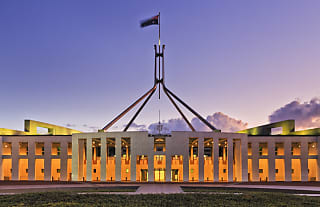
At the second Senate Economics Legislation Committee hearing on the minimum tax on discretionary trusts, on Friday (6 November), academics spoke out on why the proposals are long overdue.
Fronting the committee, UNSW School of Accounting auditing and taxation associate professor Dale Boccabella called the government’s equity rationale for its trust tax bill “correct”.
“There’s a collection of people in our community who are more than happy to engage in aggressive tax planning,” Boccabella said.
“The discretionary trust for those people is a gift; they just love it…You’ve got chains of discretionary trusts, you’ve got the trustee sort of converting trust income to trust capital, or the other way around to manipulate the tax income after the taxable income allocation to beneficiaries. It just goes on and on and on.”
Boccabella added that the use of the discretionary trust structure is totally tax-driven.
“The key point I would be making is the allocations to bucket companies… are purely tax-driven; there is no other explanation for most of us. I personally feel comfortable if this reform measure basically gets rid of bucket companies… It’s appropriate,” Boccabella said.
Dr Sonali Walpola, associate professor at the ANU College of Business and Economics, agreed with Boccabella, emphasising the use of discretionary trusts by the wealthy for tax minimisation.
“The inclusion of corporate beneficiaries in discretionary trusts overwhelmingly – maybe it’s nearly 100 per cent of the time – is used purely to cap residual trust income at the corporate tax rate.
“It’s for this reason that one of the leaders in our discipline said at a conference that, for the mega rich, the highest tax rate is not 47 per cent; it is the corporate tax rate, because wealthy Australians use trust structures to reduce their tax,” Walpola said.
“If you do want to keep using a discretionary trust, and you do not want to restructure or essentially become a quasi-fixed trust under the EET regime, you will be within the reform. As long as you are not using a corporate beneficiary, the result is not harsh – the effect of the reform is that you’re going to pay your fair share of tax.”
Fair share of taxation ‘nearly impossible’
Boccabella added that it is “nearly impossible” to get a fair amount of tax out of users of discretionary trusts.
“A bucket company might sit there holding money until it can distribute its profits as dividends with franking credits at a time when family members might have a lower rate of tax, once they’re in retirement. It can really be used over a longer term to essentially really minimise the tax burden,” Dr Kathryn James, associate professor at the Melbourne Law School, told the committee.
“It’s clearly appropriate to have a minimum tax – it is a well-used, well-worn tax policy tool to get some reasonable amount… of tax out of this sort of entity transaction,” Boccabella said.
James noted that alternative transitional arrangements will be available for those in the structure moving to a corporate structure with rollover relief, an excluded exempt trust concession.
‘Wasting activity’
“We don’t need small businesses paying accountants and lawyers thousands of dollars to set up complex tax structures to minimise tax liability, when we should just have a simple system, which is like, ‘is it beneficial to operate through a discretionary trust?’ If so, that option: you pay tax at 30 per cent. ‘Is it beneficial for you to operate through a company?’ If so, that option: you get the benefits of limited liability with a company, but you pay tax at 30 per cent or 25 per cent if you’re a small business,” James said.
James told the committee that the discretionary trusts structure is unnecessarily complicated, noting that the compliance costs are not just high for the establishment of the structure.
“The compliance costs in operating complex discretionary trust structures are also incredibly high, and it’s just ridiculous that we’re maintaining this. Let’s move to a simplified system where we tax broadly and neutrally across different business structures so that we’re not engaging in these additional compliance costs, but we’re also contributing to public goods through paying our share in taxation.
“They don’t have to engage in complex tax planning to [create] this particular entity or this particular form, that we pay tax on our net profits as we should as a contribution to society for the goods that we all benefit from, and to stop this… wasting activity of paying accountants and lawyers to do complex things when in reality we’re still doing the same things,” James said.
James stressed that while small businesses should continue to be encouraged to operate, they should be taxed broadly and neutrally just like the rest of the nation.
“Ideally, what we want to do is move to a broad base where people run a small business and do the stuff they want to do in that small business to make a profit, and don’t get sucked up in these hours and dollars spent on tax planning. From a tax policy perspective, that’s what we aim for; we aim to tax broadly and neutrally; we don’t want to pick winners, we want to let the market pick the winners for us,” James said.
“There seems to be an argument that people shouldn’t pay tax, because of the virtue of the income that they earn. We’re trying to cut off these tax avoidance opportunities so that we have enough revenue and that we all feel like we’re contributing according to our ability.
“With any change, there will be compliance costs, but I think in the long term, compliance costs should be reduced overall if we’re moving to a more simplified, broadly based system.”
Stopping tax avoidance
Earlier in the hearing, economist Saul Eslake noted that in Australia, there are 40 discretionary trusts per 1,000, compared to nine in the US and two in the UK.
“We don’t have high levels of productivity here as a result of discretionary trusts. Discretionary trusts might be useful to individuals and to family groups, but that needs to be balanced against the interests of the whole community,” James said.
“When it comes to taxation, we need to really put a stop to discretionary trusts being used by well-heeled individuals and wealthy family groups [avoiding] paying tax… We’re talking about very wealthy family groups not paying tax at all, [which] undermines the progressivity of our tax system. It undermines the idea that we should pay according to our ability. I think there’s certainly a need to reduce the tax advantages for discretionary trusts.”
While there are many ways that the reform could go, James called the government’s discretionary trusts bill clever.
“[This reform is] very significant, and it’s a fairly clever response to try and address this issue. There’s lots of different models, and none of them is perfect, but I think this will have a huge effect on the use of discretionary trusts, and then of course it’ll be whack-a-mole for whatever the next tax minimisation tool is, be it testamentary trusts or superannuation funds; but this is an important tool to shut down the use of discretionary trusts for tax minimisation,” James said.
“This is all about tax minimisation…most of the users of discretionary trusts are not in business; they’re passive investors,” Boccabella said.
Want to see more stories from trusted news sources?
Make Accounting Times a preferred news source on Google.
Click here to add Accounting Times as a preferred news source.
Carlos Tse
AUTHOR
Carlos Tse is a graduate journalist writing for Accountants Daily, HR Leader, Lawyers Weekly.
KNOW MORE