

‘Very disappointed’: Big 4 gave ASIC ‘cold shoulder’ despite being slapped with notices

30 November 2026 • 6 minute read
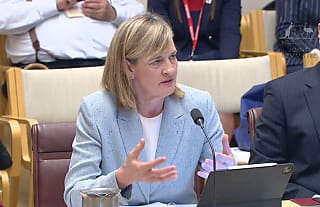
Amid the ongoing allegations of audit misconduct and misuse of confidential client information at KPMG Australia and the subsequent fallout, the Australian Securities and Investments Commission (ASIC) recently appeared at the Parliamentary Joint Committee on Corporations and Financial Services Oversight of ASIC, the Takeovers Panel and the Corporations Legislation.
This followed the release of its review of internal complaints at KPMG, Deloitte, PwC, and EY (Report 848), which said ASIC reviewed a total of 558 complaints.
Out of these, 35 internal complaints related to potential audit conduct issues. At the parliamentary hearing, ASIC executive director, regulation and supervision Peter Soros provided a breakdown of the figures not provided in the report.
KPMG and PwC chalked up the highest number of the 35 audit-related complaints with 13 and 12 respectively, while Deloitte and EY had five each, according to Soros.
ASIC’s review specifically underscored that its engagement with the majority of the large accounting firms was “protracted and legalistic”, particularly around the compulsory notices and information requested by ASIC.
It said the majority of firms responded by withholding and redacting documents, making extensive legal professional privilege claims, missing required deadlines, and prioritising their own internal investigations.
It also said that it engaged with the firms through initial meetings, follow-up correspondence, ongoing meetings and discussions, further compulsory notices and escalation to senior leaders. This included a letter to the chairs of the firms asking them to cooperate with the surveillance by providing timely and complete responses to ASIC’s information requests.
Big 4 showed lack of understanding of ASIC notices
The parliamentary committee drilled down on this lack of cooperation by the big four audit firms and the number of steps ASIC had to take to ensure that the firms eventually cooperated with notices and requests, and agreed to provide documents under a voluntary disclosure agreement, or changed their legal adviser.
Committee chairwoman Deborah O’Neill pointed out that ASIC essentially had to “coerce” the firms to comply with its request for information.
Commenting on the behaviour of the firms, ASIC commissioner Kate O’Rourke said: “We were very disappointed with the reaction of the firms, and particularly in the circumstances of such heightened interest in complaints and whistleblowing, including through this committee’s work.
“We were very disappointed to have to take the additional steps that we describe in the report that we did take because we were very determined to have the full set of information provided to us, and therefore took the steps, the escalation, the additional effort to make sure that we got what we needed in order to make this assessment.”
ASIC chairwoman Sarah Court said that if the corporate regulator issues compulsory notices and requests large, sophisticated entities such as banks and major institutions for information that is related to a surveillance they are undertaking, they will typically produce the material required within the stipulated deadlines and they will communicate that to ASIC. She acknowledged that they sometimes might take a legalistic position.
“But this [dealings with the big four audit firms] was just a markedly different kind of engagement,” Court said.
“It was more like just a lack of understanding about what it means to respond to a statutory notice… if I could talk that bluntly. We’re not used to dealing with it quite like this. This was a very new thing for us to do.”
Court highlighted that ASIC has not compiled a surveillance report like Report 848 before and in such a short period of time. She said ASIC sent three rounds of notices within months and wrote the report a couple of months after that.
Hurdles at every level
Soros, whose team led this undertaking, told the parliamentary committee that ASIC personally meets with the firms to issue the compulsory notices, explains what it requires from the firms, provides context around its expectations, and offers for them to contact ASIC with any questions.
A stunned O’Neill said: “You actually showed up in person and said we want this stuff, and they gave you the cold shoulder”.
Soros responded in the affirmative and added that all four firms struggled to “varying degrees” with providing complete documentation and the legalistic responses.
“But we still received some challenges throughout the process with incomplete responses, some legalistic responses, some professional privilege, legal professional privilege issues. We had to keep pushing more repeatedly and at more senior levels than we would otherwise with our usual surveillance activity,” he said.
“When we escalated these issues with senior members of the firms, we did see a change in posture.”
He echoed Court’s view that the engagement with the big four audit firms differed from the regulated cohorts ASIC typically engages with.
“We wouldn't expect to have to pick up the phone if it was a bank or an insurance company,” he said.
“They're more experienced in dealing with these things. That was definitely frustrating for us to have to go through that escalation procedure, particularly when we were trying to work to such short timeframes. Given the public interest in this topic, we were trying to deliver this report as expeditiously as possible.”
KPMG’s $95m Macquarie audit contract under scanner
Prior to the hearing, ASIC revealed that it is assessing conduct around KPMG’s tender for the appointment of external auditor of Macquarie Group, its subsidiaries and managed funds.
In its submission to the Parliamentary Joint Committee on Corporations and Financial Services, ASIC said it is investigating conduct in relation to the use of confidential information and the management of potential conflicts between board members and audit partners during the tender process.
It was revealed in September that Macquarie director and a former KPMG partner Michelle Hinchliffe had contact with key KPMG personnel while the auditing firm was bidding for Macquarie’s audit contract.
Macquarie said that Hinchliffe said she recalls meeting KPMG pitch team personnel three times during that period.
However, a few weeks later Macquarie cleared Hinchliffe and another non-executive director, Susan Lloyd-Hurwitz, of breaching their fiduciary or statutory duties, or Macquarie’s policies and rules.
In June this year, The Australian Financial Review reported that Hinchliffe personally attended early-stage bid meetings in Sydney and London when EY pitched Macquarie’s executives for its audit. It further reported that EY executives were shocked that she was present, where she asked questions and took detailed notes.
The Macquarie Bank board withdrew its recommendation to engage KPMG as auditor and retained PwC instead after KPMG failed to meet the bank’s criteria. KPMG has also lost audit contracts of Lendlease, ANZ, and IAG, while Crown Resorts also dumped the firm and is seeking a replacement.
Other KPMG investigations continue
In March this year, Senator O’Neill aired allegations of misconduct from a KPMG whistleblower in relation to the firm’s audit independence, misuse of confidential information, and tender integrity failures.
The whistleblower also specifically raised “serious concerns” about the independence of KPMG’s tender process in pursuit of Macquarie’s audit contract because Hinchliffe was allegedly “centrally involved” in the process.
ASIC in its submission also said it is continuing its investigations into KPMG around the suspected misuse of confidential client information involving Lendlease and Optus, which includes the conduct of former KPMG audit partners Eileen Hoggett and Paul Rogers and other registered company auditors.
It is also investigating suspected whistleblower victimisation and suspected misleading statements in KPMG’s 2025 Transparency Report.
“We have obtained substantial evidence in these investigations, and they are significantly advanced,” ASIC said.
While KPMG announced in June that Rogers would depart the firm, Hoggett was expelled from the KPMG partnership after an Allens report had identified new evidence that substantiated a whistleblower allegation that client information relating to the Lendlease audit had been retained in a KPMG Sydney office locker.
She initiated legal proceedings in the Supreme Court of NSW against KPMG in September following what she labelled her “unprecedented” expulsion.
Both Hoggett and Rogers had their practising certificates cancelled and were banned from practising as a principal for a specified period at any firm following disciplinary tribunal action by Chartered Accountants Australia and New Zealand (CA ANZ).
Want to see more stories from trusted news sources?
Make Accounting Times a preferred news source on Google.
Click here to add Accounting Times as a preferred news source.
Malavika Santhebennur
AUTHOR
Malavika Santhebennur is a journalist on the accounting titles at Momentum Media, Accountants Daily and Accounting Times. She writes news about the accounting industry, regulatory changes, compliance, and the wider accounting landscape. Prior to this, Malavika wrote across several brands in Momentum Media and covered a range of industries, including mortgages, broking, law, real estate, wealth, space, aviation, and defence. Before joining Momentum Media in 2019, Malavika wrote for Money Management and Super Review, with a focus on financial services, wealth, and superannuation.
KNOW MORE