

OECD urges Australia towards tax, regulatory reform

By Emma Partis
14 April 2026 • 2 minute read
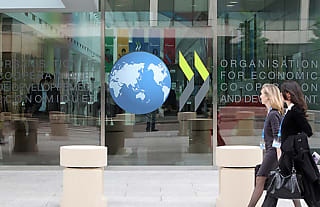
Last Thursday (9 April), the OECD released its Foundations for Growth and Competitiveness report proposing policy solutions to reverse declining productivity growth, an issue common across many rich nations, including Australia.
“Reversing three decades of a declining economic growth trajectory is essential to securing and sustaining meaningful gains in household incomes and living standards,” OECD secretary-general Mathias Cormann said.
“Getting this right will unlock stronger growth and competitiveness, cushion the fiscal pressures of ageing populations and position countries to harness the full potential of AI and other transformative technologies.”
For Australia, one of the OECD’s key recommendations was to “improve the structure of the tax system.”
“Australia relies more on personal and corporate income taxes and less on goods and services taxes and environmental taxes than most other OECD countries,” the report read.
To remedy this, the OECD recommended that Australia broaden the GST base by reducing exemptions and consider increasing the rate.
“Stronger reliance on goods and services taxes, a more growth-friendly and resilient tax base, can help rebalance the sharing of the tax burden between people in employment and the retired population in the context of an ageing population,” the report read.
“Such taxes are also more difficult to evade and have weaker disincentives to work than income taxes.”
The OECD also suggested that Australian policymakers should reduce tax concessions on private pensions and housing-related capital gains, and replace stamp duty with land tax.
The Australian government has already moved to reduce tax concessions in the superannuation system with the Superannuation (Building a Stronger and Fairer Super System) Imposition Bill 2026, which included the controversial Division 296 super tax.
Treasury is also reportedly considering paring back the CGT discount for housing investments as part of its May budget package.
Aside from tax, the OECD also suggested that Australia would benefit from a regulatory overhaul to streamline overlapping or inconsistent regulations across states and territories.
“Business dynamism is impeded by overlapping regulations across levels of government,” the report read.
“Australia was among the least restrictive OECD countries in the late 1990s and early 2000s but is now around average. Australia’s licensing regime is relatively burdensome, with around one fifth of workers requiring an occupational license or registration.”
The report also recommended that Australia should streamline the process for recognising trusted overseas regulatory standards and strengthen competition laws relating to abuse of dominance, exclusive dealing, and access regimes.
“In a relatively small and remote economy prone to concentrated markets, further action is needed to foster competition and ensure that monopolies are well regulated.”
Want to see more stories from trusted news sources?
Make Accounting Times a preferred news source on Google.
Click here to add Accounting Times as a preferred news source.
Emma Partis
AUTHOR
Emma Partis is a journalist at Accountants Daily and Accounting Times, the leading sources of news, insight, and educational content for professionals in the accounting sector. Previously, Emma worked as a News Intern with Bloomberg News' economics and government team in Sydney. She studied econometrics and psychology at UNSW.
KNOW MORE