

Signs point to an easing job market, but are other forces at play?

25 May 2026 • 4 minute read
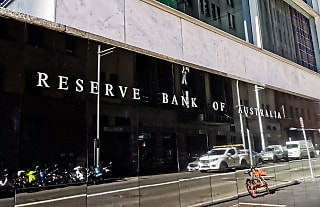
In light of yesterday’s Labour Force data from the Australian Bureau of Statistics (ABS) reporting a 4.5 per cent unemployment rate, economists are asking whether the second month of the global energy crisis and greater financial uncertainty will affect how the RBA reacts to a supposedly cooling economy.
While it seems the recent rate hikes are having the intended effect, it also remains to be seen whether they are working a little too well.
According to BDO chief economist, Anders Magnusson, “While the drop in employment provides some comfort, an increase in hours worked suggests a nuanced story where the labour market is not cooling as quickly as the headline figures imply.”
“The adjustment is modest, and it is unclear how much the move reflects underlying domestic conditions”.
“The unemployment rate is now above the Bank’s earlier forecast for June of 4.2 per cent, suggesting the labour market may be loosening faster than anticipated”.
Chief economist at Betashares, David Bassanese, agreed that there are tentative signs that suggest the labour market is buckling.
Whether the RBA raises rates again, he said, depended on inflation outcomes and whether the April figures were a one-off or part of a softening trend.
With surveys by the RBA, NAB and ANZ all revealing a marked softening in hiring intentions, Bassanese suggested Australia would benefit from a “‘growth recession’ rather than an outright recession this year – namely a period of positive but below-trend economic growth that eases capacity constraints and helps bring down inflation”.
However, two external factors would affect the RBA’s decision.
“Important in this regard is whether the Iran war continues to drag on, as the ongoing closure of the Strait of Hormuz will inevitably result in much higher oil prices once inventory stockpiles have been depleted,’ he said.
“Further complicating the local economic outlook is the fall-out from the federal government’s poorly received budget, which risks adding to the downward pressure on asset prices and economic sentiment in the months ahead.”
Bassanese predicted the central bank would hold steady at next month’s policy meeting, and by August, again depending on the Iran war and resulting changes in resource prices, the case for further tightening may ease.
“It’s also likely that the recently announced budget changes to negative gearing and capital gains tax will have dampened the property market and business and consumer sentiment,” he added.
Trent Saunders of CBA Economics agreed that it was too early to tell how much of the rise in the unemployment rate reflects noise or a more fundamental shift in underlying momentum, but said conditions were no longer tightening.
“In trend terms, we expect the unemployment rate to rise from here as economic growth in Australia slows. We expect a peak of 4.7 per cent in late 2027, but risks around this forecast depend on how the energy crisis unfolds from here.”
NAB suggested a rate hike as early as August. According to senior economist Taylor Nugent and economist Michael Hayes, there is now “less urgency for the RBA Board to lean more firmly against inflation risks, and the balance of risks has shifted in favour of the Board’s characterisation that they have some ‘space’ to monitor incoming data for both inflation and activity impacts”.
“As a result, we have pushed our expectation for a further 25bp increase in the cash rate to the August meeting (previously June).”
Westpac economist Ryan Wells also noted that the April findings were weaker than expected, but urged analysts to consider the “abnormal seasonality” around Easter and the impact of a significant youth cohort on employment and unemployment numbers.
“These bits of noise and seasonality should wash out with May’s data, providing a clearer read on underlying momentum.”
“We expect the bulk of the labour market softening to arise in the second half of this year, once the impact of the Middle East shock and interest rate rises have had more time to reverberate throughout the wider economy.”
As such, they predicted the RBA to pause interest rates and retain the cash rate in June. Looking to the future, they anticipated higher interest rates once the energy price shock passes through to the market.
Similarly, ANZ said headline numbers supported an earlier expectation that the RBA board would pause next month.
The bank’s head of Australian economics, Adam Boyton, said: “The lift in hours worked in the month has pushed our estimate of full employment higher, although it remains in the range it has been for the past few years.”
“We suspect that the RBA will still choose to assess the labour market as ‘tight’ in the June post-meeting statement. The 4.5 per cent unemployment rate and the trend decline evidence in the employment to population ratio over the past year does suggest, though, that the time is approaching when the RBA will need to describe the labour market as ‘balanced’.”
Boyton reinforced the bank’s earlier prediction of a 4.35 per cent cash rate peak over this cycle, suggesting a softening convincing enough to keep the RBA on hold at the August meeting.
Recruitment expert Sarah Donegan disagreed with these forecasts, predicting a more dire situation that is likely to compound the effects of rising employment costs, minimum wage increases, tighter workplace regulation, stubborn inflation, higher interest rates, increased energy and fuel costs, global uncertainty, and increasingly cautious consumers.
“There’s only so much businesses can absorb before there are consequences like job losses. Personally, I wouldn’t be surprised to see unemployment rise to 5 per cent by the end of the year if not sooner,” she said.
In light of the data and with a focus on the consequences for employment, the Australian Council of Trade Unions (ACTU) look to the RBA to “do its job”.
Noting that the unemployment rate for women in particular hit a level not seen since mid-2021 (4.4 per cent), it called for the RBA “to take heed of the risk to jobs and not increase interest rates when it meets in June”.
ACTU assistant secretary, Liam O’Brien, added: “We all remember what happened when they left interest rates too high for too long and working people were caught in the crosshairs then.”
“Working people, and working women especially, are relying on the Reserve Bank to do its job and protect full employment.”
Want to see more stories from trusted news sources?
Make Accounting Times a preferred news source on Google.
Click here to add Accounting Times as a preferred news source.
Amelia McNamara
AUTHOR
Amelia is a Professional Services Journalist with Momentum Media, covering Lawyers Weekly, HR Leader, Accountants Daily and Accounting Times.
KNOW MORE