

IMF echoes calls for comprehensive tax reform in Australia

By Emma Partis
17 February 2026 • 2 minute read
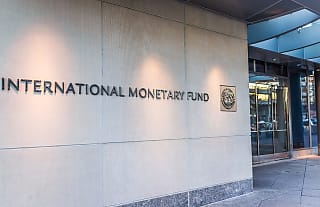
On Sunday (15 February), the International Monetary Fund (IMF) published the findings of its annual health check on the Australian economy.
The UN agency found that Australia was managing a soft economic landing, but faced risks to its outlook skewed towards slower growth and higher inflation. Australia’s reliance on direct taxes and high effective cost of capital hindered investment and productivity, the IMF added.
Like most advanced economies, the IMF said Australia was facing “significant” fiscal headwinds from its ageing population, climate change and health-related spending. It said the government should focus on finding “efficiency savings” in these growing cost areas.
The IMF also recommended Australia embark on “comprehensive tax and expenditure reform” to address its outsized reliance on direct taxes and high cost of capital.
“A comprehensive reform package should aim at improving the efficiency, equity, and sustainability of the tax system,” the report read.
“Options include an increase in Goods and Services Tax (GST) rate and removal of GST exemptions, offset by changes to Corporate Income Tax (CIT) settings.”
The IMF suggested that Australia’s CIT rate could be lowered, coupled with compensatory measures such as adjustments to resource rent taxes. It acknowledged that the Productivity Commission’s proposed cash flow tax could achieve similar goals, but warned that the “relatively untested approach” could come with implementation risks.
The IMF also called out rising state expenditure driven by infrastructure, health and cost-of-living support as a particular problem. It noted that major sub-national tax reform had been absent in recent years, despite mounting spending pressures.
“Should state spending continue to accelerate, risks include inefficiency due to rising construction costs and additional credit rating downgrades leading to higher interest expenses,” the report read.
“As the Commonwealth is viewed as a de facto guarantor of state debt by some credit rating agencies, higher sub-national debt could eventually impact Commonwealth borrowing costs.”
The IMF found that Australia’s state spending was accelerating, and fiscal disparities between states were deepening. Strong commodity prices were widening the fiscal gulf between resource-rich states such as WA and other states, the report noted.
“Fiscal disparity has grown, with robust commodity prices favouring resource-rich states and elevated expenditures leading to weakened fiscal positions in other regions,” the report read.
The IMF found that the divergence in fiscal outcomes was largely due to cyclical economic conditions - namely, high commodity prices and strong labour tax receipts - and states with a stronger reliance on payroll taxes, stamp duty and land taxes saw slower revenue growth.
To address fiscal concerns, it suggested the government could raise and broaden the GST, impose a land tax, and reduce inefficient state taxes such as stamp duty. It also highlighted fiscal equalisation as an area to revisit, although the government has said it would not consider undoing the GST distribution reforms made in 2018.
“On the revenue side, areas of discussion could include fiscal equalisation, GST reform, and land tax,” the report read.
“For instance, a GST increase could be partnered with a reduction in inefficient state taxes such as fees and stamp duty.”
The IMF added there was scope to improve states’ accountability for their fiscal management. For example, the Parliamentary Budget Office’s mandate could be expanded to include analyses of the states’ fiscal positions including debt levels, costs of servicing debt, estimates of structural deficits and vertical imbalances.
“Should states continue to miss targets, the Commonwealth could adopt a risk-based monitoring framework,” the IMF suggested.
“States with rising debt and deficits could be subject to enhanced scrutiny and oversight, under an integrated framework for evenhandedness, and supported by corrective mechanisms if no improvement is observed.”
Want to see more stories from trusted news sources?
Make Accounting Times a preferred news source on Google.
Click here to add Accounting Times as a preferred news source.
Emma Partis
AUTHOR
Emma Partis is a journalist at Accountants Daily and Accounting Times, the leading sources of news, insight, and educational content for professionals in the accounting sector. Previously, Emma worked as a News Intern with Bloomberg News' economics and government team in Sydney. She studied econometrics and psychology at UNSW.
KNOW MORE