

US wins preferential treatment under ‘side-by-side’ OECD global minimum tax rules

By Emma Partis
7 January 2026 • 2 minute read
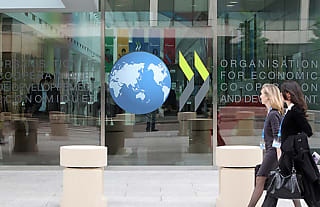
On Monday (5 January), the Organisation for Economic Cooperation and Development (OECD) unveiled a fresh ‘side-by-side’ global minimum tax package, which included exemptions for US multinationals under global minimum tax rules.
The OECD said this was a “way forward” for the 147-country partnership against base erosion and profit shifting (BEPS), an international effort to impose a 15 per cent global minimum tax rate and curb multinational tax avoidance.
The agreement has previously been rocked by US resistance, including threats to impose a 15 per cent revenge tax in response to perceived “unfair foreign taxes.” To convince US lawmakers to axe the revenge tax, the G7 agreed to exempt US companies from OECD Pillar 2 global minimum tax rules in July 2025.
The FACT Coalition, a US-based corporate alliance advocating for global tax transparency, said the OECD’s freshly unveiled arrangement represented a regrettable setback in the global fight against corporate tax avoidance.
“This deal risks nearly a decade of global progress on corporate taxation only to allow the largest, most profitable American companies to keep parking profits in tax havens,” FACT policy director Zorka Milin said in a statement.
While the US helped establish the global anti-base erosion model roles in 2020 and 2021, the Trump administration has since railed against the framework, labelling it as discriminatory to US-headquartered multinational enterprises (MNEs) in a January 2025 White House statement.
Under the newly published OECD framework, qualified side-by-side (SbS) regimes would be granted exemptions from income inclusion (IIR) and undertaxed profits (UTPR) rules under the SbS safe harbour.
Essentially, this would shield US multinationals from ‘top up’ taxes designed to ensure MNEs paid at least 15 per cent tax on their global profits.
The OECD said that the SbS safe harbour would simplify compliance for MNEs headquartered in jurisdictions with a tax system that imposed “minimum tax requirements” with respect to domestic and foreign income.
This special safe harbour could only apply to regimes that ensured their domestically headquartered MNEs had “no material risk” of paying a tax rate below 15 per cent for their domestic or foreign operations, the OECD said.
Eligible jurisdictions would also be required to incorporate “substantial mechanisms” to address base erosion and profit shifting risks.
As of 1 January 2026, the only qualified SbS regime recognised by the OECD was the US.
Research from the EU Tax Observatory released in December estimated that approximately half of the foreign profits made by US-headquartered entities were booked in tax havens.
“Large U.S. multinational corporations have always been among the most competitive, innovative, and successful in the world. What they have not always done, however, is pay their fair share of taxes,” Milin said.
Want to see more stories from trusted news sources?
Make Accounting Times a preferred news source on Google.
Click here to add Accounting Times as a preferred news source.
Emma Partis
AUTHOR
Emma Partis is a journalist at Accountants Daily and Accounting Times, the leading sources of news, insight, and educational content for professionals in the accounting sector. Previously, Emma worked as a News Intern with Bloomberg News' economics and government team in Sydney. She studied econometrics and psychology at UNSW.
KNOW MORE